
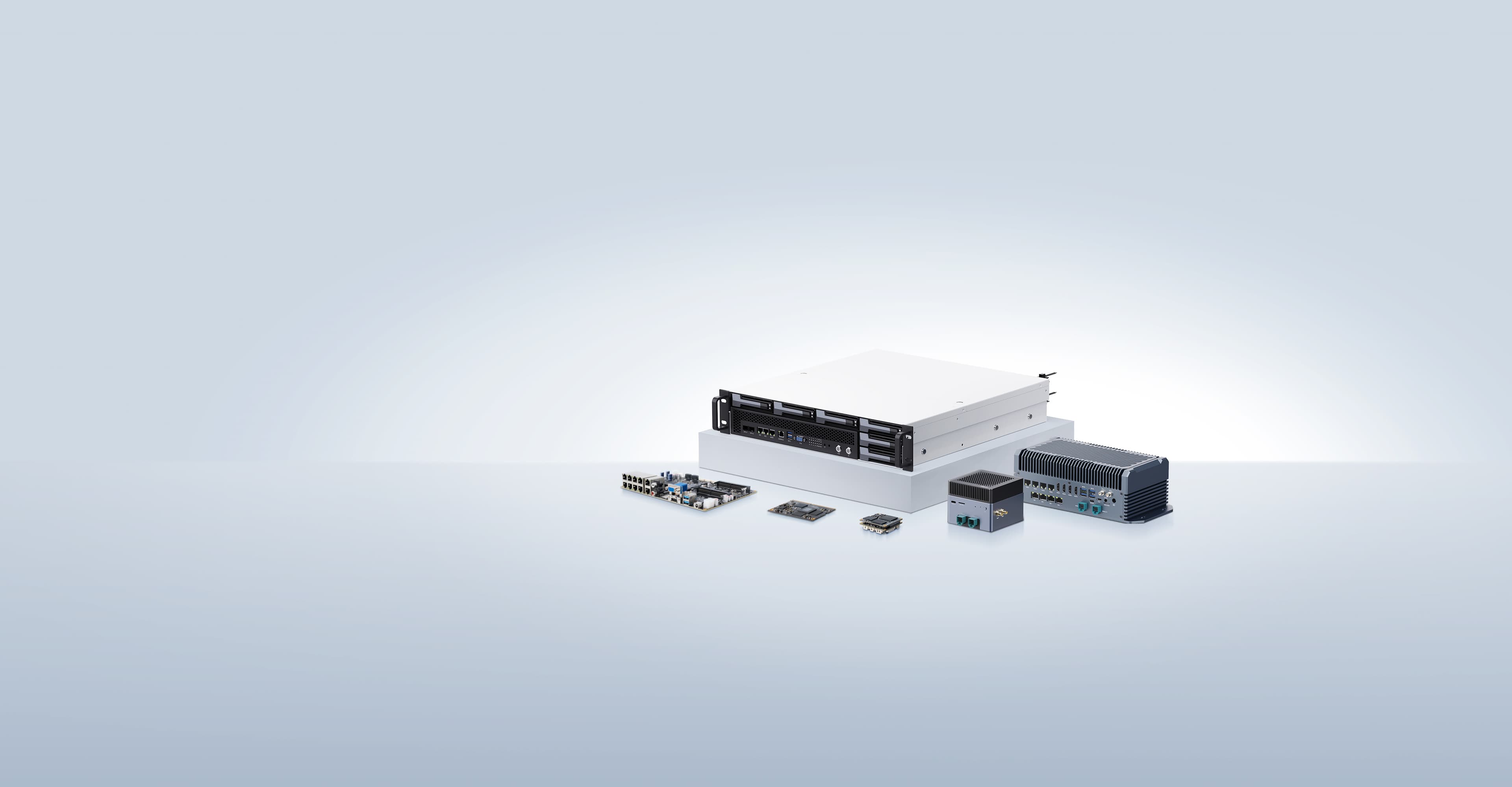


K3 RISC-V AI Computing Module
Supports Running 30B Large Models
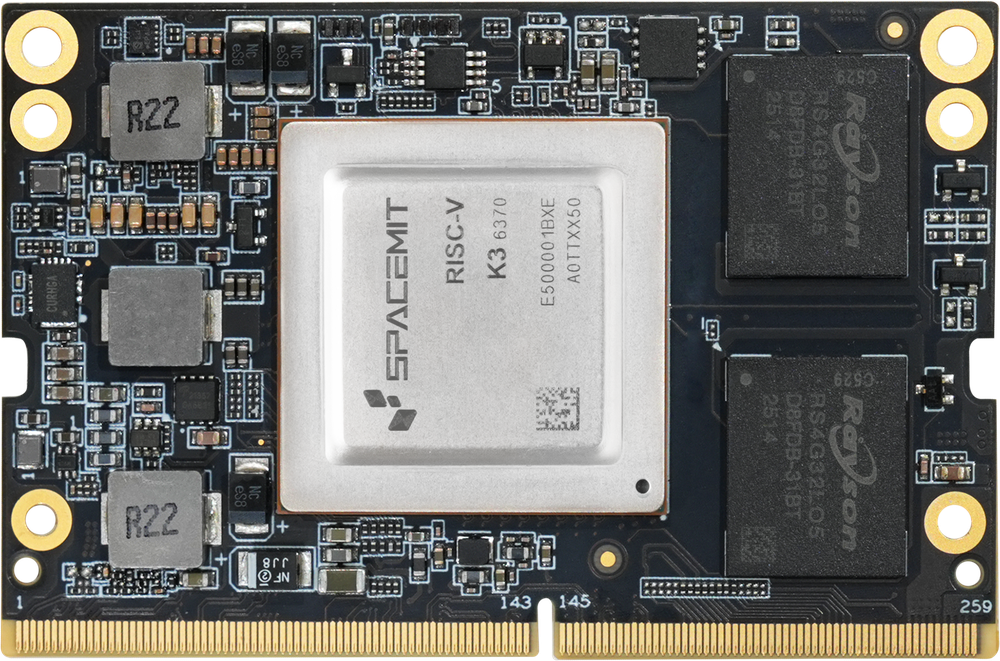
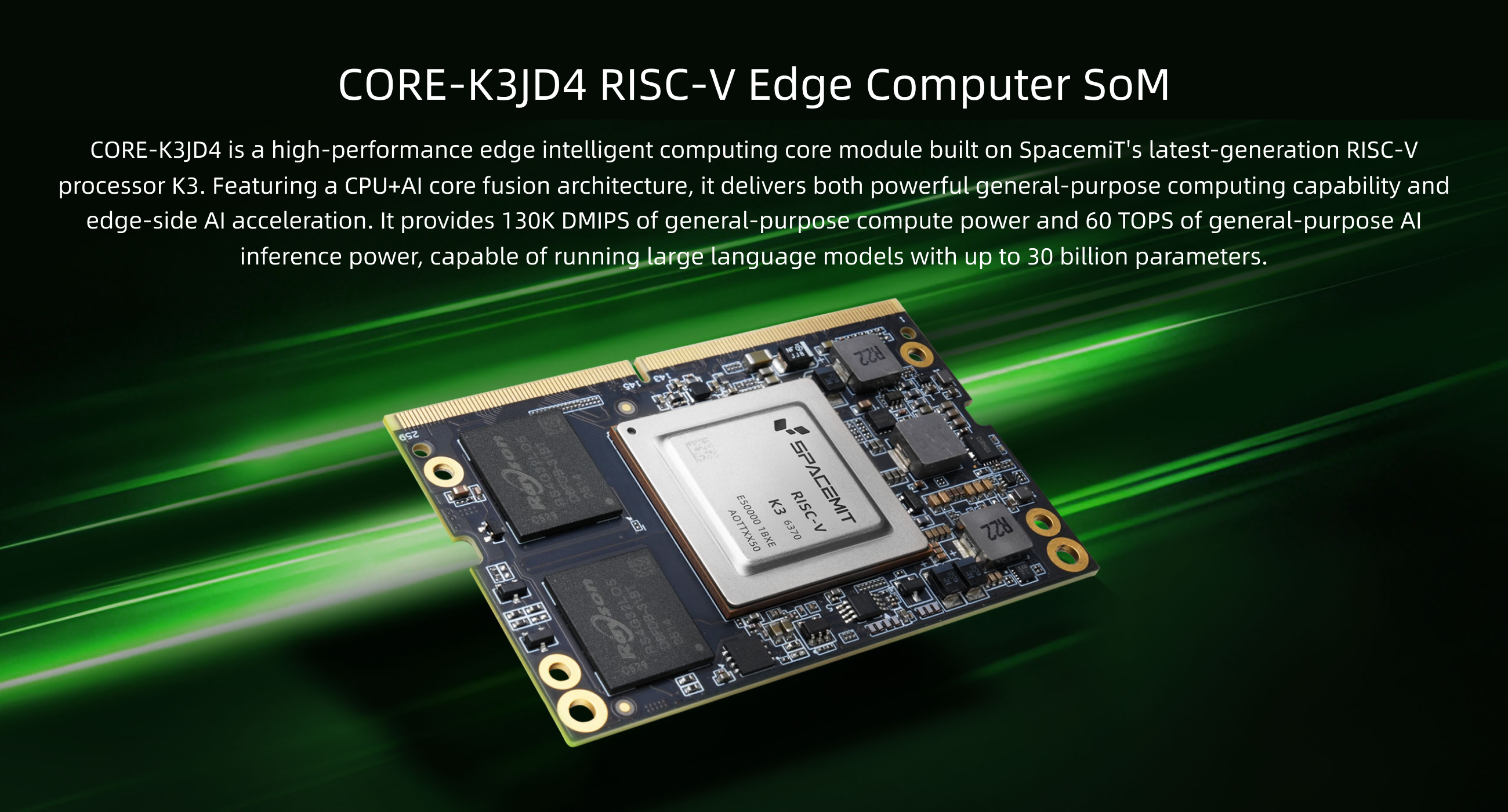
CORE-K3JD4 is a high-performance edge intelligent computing core module built on SpacemiT's latest-generation RISC-V processor K3. Featuring a CPU+AI core fusion architecture, it delivers both powerful general-purpose computing capability and edge-side AI acceleration. It provides 130K DMIPS of general-purpose compute power and 60 TOPS of general-purpose AI inference power, capable of running large language models with up to 30 billion parameters.
Overview
Features
High-performance RISC-V AI Processor K3
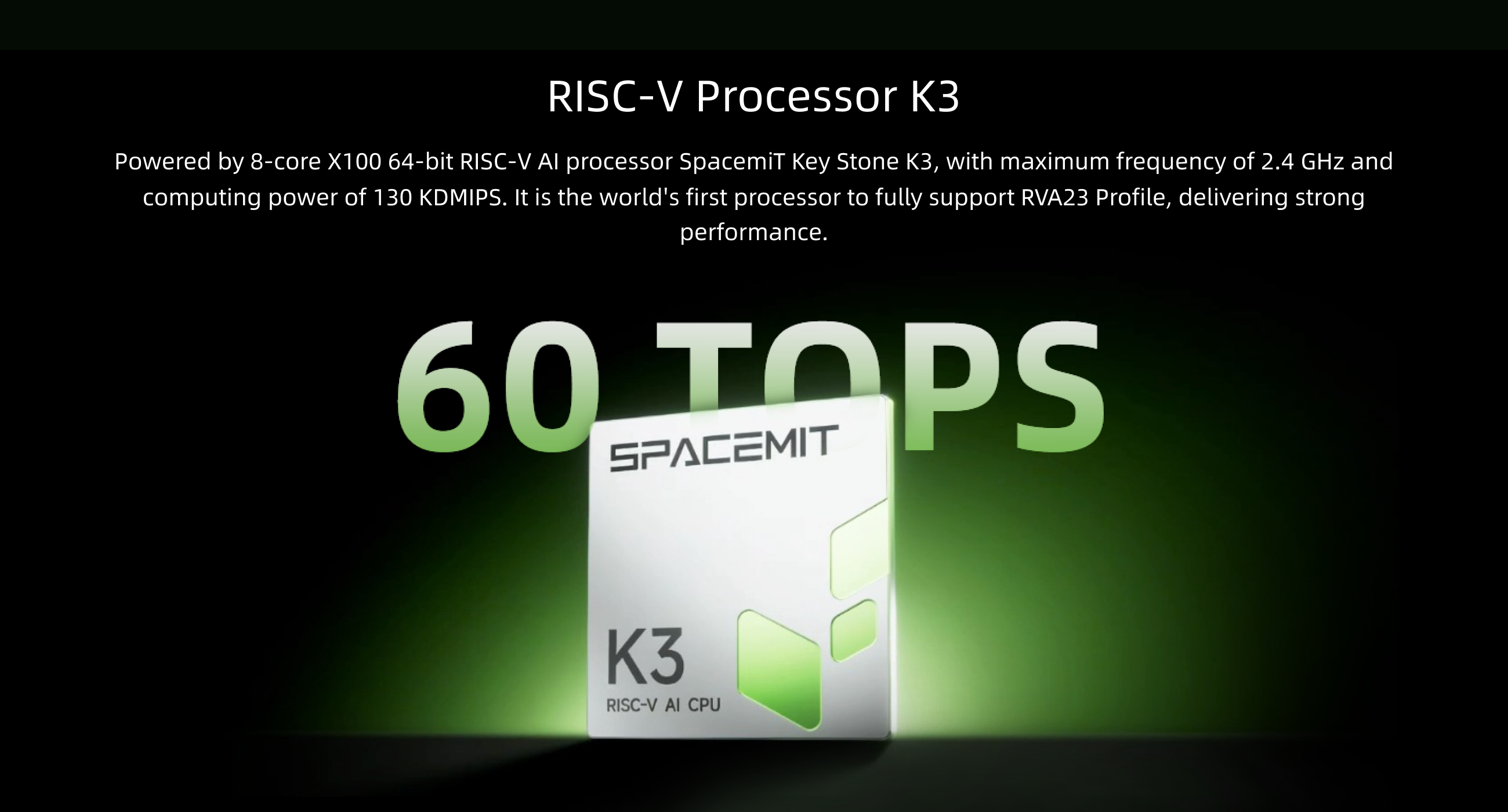
Equipped with an 8-core X100 64-bit RISC-V AI Processor SpacemiT Key Stone K3, it features a maximum main frequency of 2.4GHz and a computing power of 130KDMIPS. Supporting the complete RVA23 Profile, it delivers robust performance and can meet the requirements of high-performance computing and complex scenario applications.
Supports Chinese Operating Systems, Independently Controllable
The SpacemiT K3 is based on the RISC-V instruction set and our own chip architecture. It fully supports Chinese operating systems and enables complete domestic production for hardware, kernel systems, and upper-layer software and hardware applications, freeing us from reliance on external technologies. It aims to create a secure, trustworthy, and independently controllable Chinese smart computing platform. So far, it has been adapted for systems like Deepin (UnionTech Community Edition), OpenKylin, OpenHarmony 6.1, OpenEuler, and Bianbu.
RISC-V Parallel Computing & Hardware Virtualization
Adopts brand-new RISC-V architecture, supports 1024-bit RVV1.0 vector computing and Vector Crypto encryption. With TCM cache & DMA acceleration, it greatly improves data throughput. Relying on RVH1.0, AIA and IOMMU extensions, it fully supports full hardware virtualization for CPU, memory and peripherals.
RISC-V Parallel Computing & Hardware Virtualization
Adopts brand-new RISC-V architecture, supports 1024-bit RVV1.0 vector computing and Vector Crypto encryption. With TCM cache & DMA acceleration, it greatly improves data throughput. Relying on RVH1.0, AIA and IOMMU extensions, it fully supports full hardware virtualization for CPU, memory and peripherals.
Higher-Level Security Defense Technology
Supports M/S/U three-level privileges, defends against Spectre, Meltdown and other vulnerability attacks at the hardware level, adopts RISC-V PMP/ePMP and dedicated IOPMP mechanisms to establish high-level security protection, supports secure boot, secure storage and signature verification, and integrates AES, SHA, RSA, SM2, SM3 and SM4 algorithms.
High-Bandwidth LPDDR5 & UFS2.2 High-Speed Storage
Supports up to 32GB large-capacity LPDDR5 high-bandwidth memory paired with UFS2.2 high speed storage. Featuring larger capacity, higher bandwidth and lower power consumption, it enables faster data read and write speeds to meet the requirements of large model private deployment for memory capacity and real-time response speed.
Native Support For The Mainline Linux Kernel
Equipped with the world's first K3 chip that meets the RVA23 Profile, the platform natively supports the Linux kernel mainline (v7.0-rc1) without the need for vendor-specific patches. It officially supports mainstream OSes like Ubuntu 26.04, with ecosystem compatibility, system stability, and long-term maintainability all hitting the standard for mainstream computing platforms. It can directly handle high-performance scenarios like desktop productivity, edge AI model inference, and edge servers.
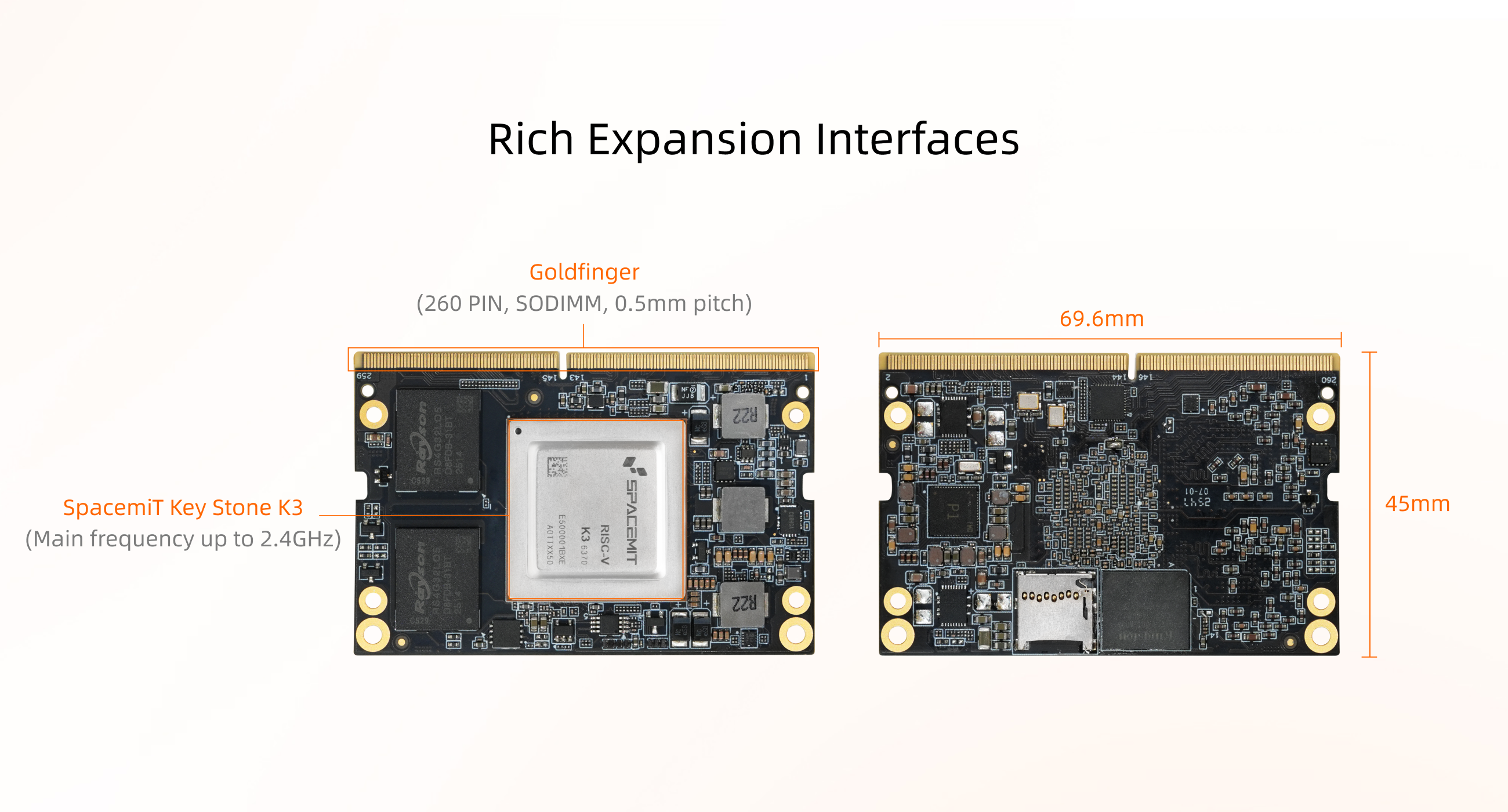
Rich Expansion Interfaces
260Pin gold finger interface, physical form and pin definition compliant with NVIDIA Jetson Orin Nano standard. Integrated with I2C, I2S, SPI, UART, CAN, PWM, GPIO, PCIe3.0, USB3.0, USB2.0, MIPI-DSI, MIPI-CSI, DP and other expansion interfaces, to meet peripheral expansion needs of diverse scenarios.


Application

Edge Computing
Supports multi-sensor fusion and real-time motion planning, enabling robots to navigate autonomously, perform tasks accurately, and interact in complex environments, suitable for inspection, service, and other scenarios.

Computing Power
Supports multi-sensor fusion and real-time motion planning, enabling robots to navigate autonomously, perform tasks accurately, and interact in complex environments, suitable for inspection, service, and other scenarios.

Data Security
As a highly reliable control core, it drives automated production lines to achieve precise assembly, smart inspection, and predictive maintenance, boosting production efficiency and quality.

AI Digital
Supports multi-sensor fusion and real-time motion planning, enabling robots to navigate autonomously, perform tasks accurately, and interact in complex environments, suitable for inspection, service, and other scenarios.
Specifications
| K3 RISC-V AI Computing Module | ||
|---|---|---|
| Basic Specifications | SOC | SpacemiT Key Stone K3 |
| CPU | 8-core X100 64-bit RISC-V AI Processor, max main frequency 2.4GHz, 130KDMIPS general computing power, full RVA23 Profile support, single-core Specint2006>9.0/GHz, equivalent to ARM-A76 | |
| AI performance | 8-core A100 delivers 60TOPS AI computing power (SquareINT4), supporting BF16, FP16, FP8, INT8, INT4 and other data formats. Equipped with RVV vector instruction set, native FP8 inference and multi-modal algorithm acceleration, it supports 30B local models, with inference performance exceeding 10Tokens/S@30B, and adapts to various AI algorithms and model deployment. | |
| GPU | Integrated 3D graphics engine, supporting Vulkan 1.3, OpenCL 3.0, OpenGL ES 1.1/3.2, EGL 1.5 | |
| Codec | Video decoding: 4K@180fps H.265/H.264/VP9/VP8, 4K@120fps VC-1/MPEG4/MPEG2/H.263 Video encoding: 4K@90fps H.265/H.264/VP9/VP8 | |
| RAM | 8GB/16GB/32GB LPDDR5 | |
| Storage | 128GB/256GB/512GB UFS2.2 | |
| Power | 12V (Support 12V~19V wide voltage input) | |
| OS | Ubuntu 26.04, Buildroot Linux with QT GUI, Fedora, Bianbu OS, Deepin, OpenKylin, OpenHarmony 6.1, OpenEuler | |
| Interface | Gold finger (SODIMM 260P standard interface, 0.5mm pitch) | |
| Size | 69.6mm × 45.0mm × 4.5mm | |
| Weight | ≈ 23g | |
| Environment | Operating Temperature: -20℃~60℃, Storage Temperature: -20℃~70℃,Operating Humidity: 10%~90%RH (No condensation) | |
| Interface Specifications | Internet | Via GMAC interface, expandable to 4-channel Gigabit Ethernet, supporting TSN protocol |
| Video input | 4 × MIPI-CSI (4 Lanes, 1.5 Gbps/Lane, supports 1/2/4 Lane mode) Supports simultaneous input of up to 12 cameras | |
| Video output | 1 × MIPI-DSI (8 Lanes, 4.5Gbps/Lane, Max resolution 4K@60fps) 2 × DP/eDP (Max resolution 4K@60fps) | |
| Audio | 6 × Full-duplex I²S (48kHz sampling rate) 4 × Half-duplex I²S (2 connected to DP/eDP controller, 48kHz sampling rate) 2 × DP/eDP audio interfaces (192kHz sampling rate) | |
| PCIe | 8 × PCIe 3.0 (8Gbps/Lane, PCIe x8 supports RC & EP modes, hot-pluggable) | |
| USB | 3 × USB3.0 HOST (combo with PCIe), 1 × USB3.0 DRD (Type-C, including USB2.0 OTG), 1 × USB2.0 HOST | |
| Others | 6 × SPI,17 × UART, 9 × I2C, 10 × CAN FD, 30 × PWM, 2 × eSPI, GPIO | |